Saturday, 5 April 2014

Noshiro and Ogata Mura

From Fukaura we went back down the coast to Noshiro, a port town on the Akita coast line that has one of Japan's few coal fired electricity plants.  The city has surely seen better days, but it's still a relatively pleasant city. We popped in to see Kaneyu, opened in 1937 as a restaurant. It's a grand building with impressive tatami hallways.  A group of long retired men from Tokyo was there practicing chanting.
Kaneyu, Noshiro
(It was pouring rain when we were there & this is a picture from 2011)

Kaneyu, Noshiro
After a quick trip to Kaneyu we went on to Ogata mura. Ogata mura is the site of a reclaimed lake, Hachirogata,  in the north east of Akita. It was a shallow lake, the second largest in Japan at the time,  filled in to make ricefields; construction began in 1957 under Dutch command. I  don't know much about the politics that went on behind it, but it seems like a very dubious construction.   

 In the war food shortages were a problem, but after the war things recovered quickly, especially with land reform that enabled the majority of farmers to be farming their own land. By the time construction began to reclaim the land that is now Ogata mura, Japan was more than self sufficient in rice.  It wasn't just Japanese political dodginess,  though political links with the construction industry are absolutely notorious; the World Bank and the UN were also apparently behind the scheme.  

I feel so sad for the fish and the fisherman, the people and fauna that appreciated the lake of old... Japan now pays rice farmers not to farm.  An awful waste of money as well as the environmental destruction.  The area is now used for solar car races as it's one of the few areas of Honshu that has long straight roads.

There is a reclamation museum, which Hiro's parents did the interior work for, that shows the history of the reclamation.
The former Lake Hachirogata

During reclamation

Now

The boats and fishermen on Lake Hachirogata

The process of Reclamation


For some reason there is a preoccupation in Tohoku visitor centres to show stuffed
versions of the native fauna...It seems particularly mournful since the habitat has been destroyed.

Hachirogata in a historical context makes me feel marginally better about it, though not much.
10,000 years ago, when sea levels were lower, there was no lake, the amount of water relative
to land has varied quite a bit over time.


Rice is Nice... very profound...
Bales of Rice

A Ford truck that was a relic of the construction era.
US Foreign Aid?

On a wall in a corridor adjacent to the museum they had
pictures of local flora and their medicinal properties.
Most of the ones that I recognise are mountain vegetables rather than
vegetables that would be growing on the reclaimed land. 


Fukaura: Engakuji and Benten-jima

While up in Odate, Hiro's parents took Hiro's older niece and me to Fukaura in Aomori.  The main appeal was returning to a temple, Engaku-ji, which I'd been to in the summer of 2011.  Hiro's nieces are into calligraphy and I wanted to show them the Sanskrit written in the temple there. Sanskrit, from my observations, is not commonly seen in temples in Japan.  I was talking to someone the other day who is doing a Masters on Buddhist matters and apparently Sanskrit is a feature that's not altogether uncommon in Shingon temples. And, as it turns out Engakuji is a Shingon temple (though apparently it was probably Tendai-shu originally.) 


The Japan Sea Coast

Engaku ji
The Sanskrit that took me back there
Jizo
Mercy, Mildness,Kindness
Jizo: 6 wishes for children
Hope, Peace, Cheerfulness

Explanation about the Jizo: the jizo will guard children against
the vices that lead to the "path to hell".
Perhaps that's not a good translation.

Temples commonly have wooden  ema  for sale.
In this case all the  ema were paper.


Benten-jima is just across the road from Engaku-ji.
Benten is a Japanized Hindu goddess whose shrines are often located near water.
(Click for lots of detail about Benten.)
Benten jima, which despite the name isn't really an island.


Views from Benten jima

Thursday, 3 April 2014

The way up (2) Aizu-Odate

Near Yamato in Fukushima

Not so many people, but not empty either


Quite a few stations have "hiking guides" on the platform.
Nozawa 

Plenty of snow on the mountains near Kanose
Near Kanose

Tsugawa Station

Walking around Tsugawa


Waiting for the train coming from the opposite direction at Tsugawa

Between Tsugawa (Fukushima) and Mikawa (Niigata)

The snow has melted, but the green yet to emerge.

The Inaho 7 train
The Uetsu line between Murakami and Fuya


Between Murakami and Fuya

The sun going down on the Japan Sea

Getting close to Sakata, rice field country.

The sun setting near Yuza machi


Changing to the Akita bound local train at Sakata

The last leg... Odate bound.


Seishun 18 Spring 2014: The way up (1) to Aizu

An early start.. Akabane, Utsunomiya, 

At Utsunomiya - the train for Kuroiso


I could have gone a standing soba, but it was too early in the day

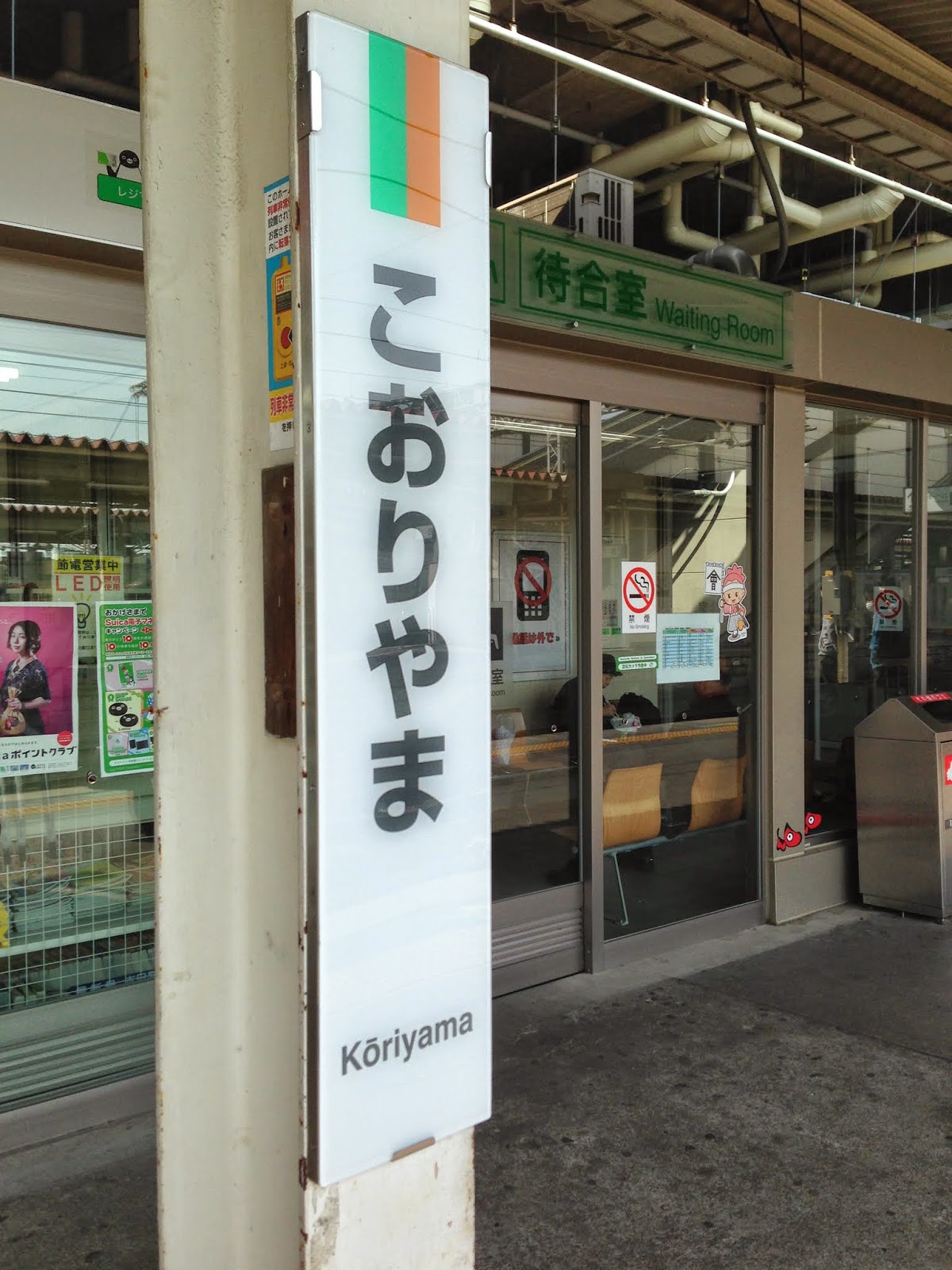
The train to Koriyama. It was a relief to have Koriyama as a terminal station.
Had it been a through train to Fukushima there'd have been a danger of falling asleep and sleeping through the stop.
 
Thanks to the world from Fukushima


The Ban'etsu line - not the steam train variety!

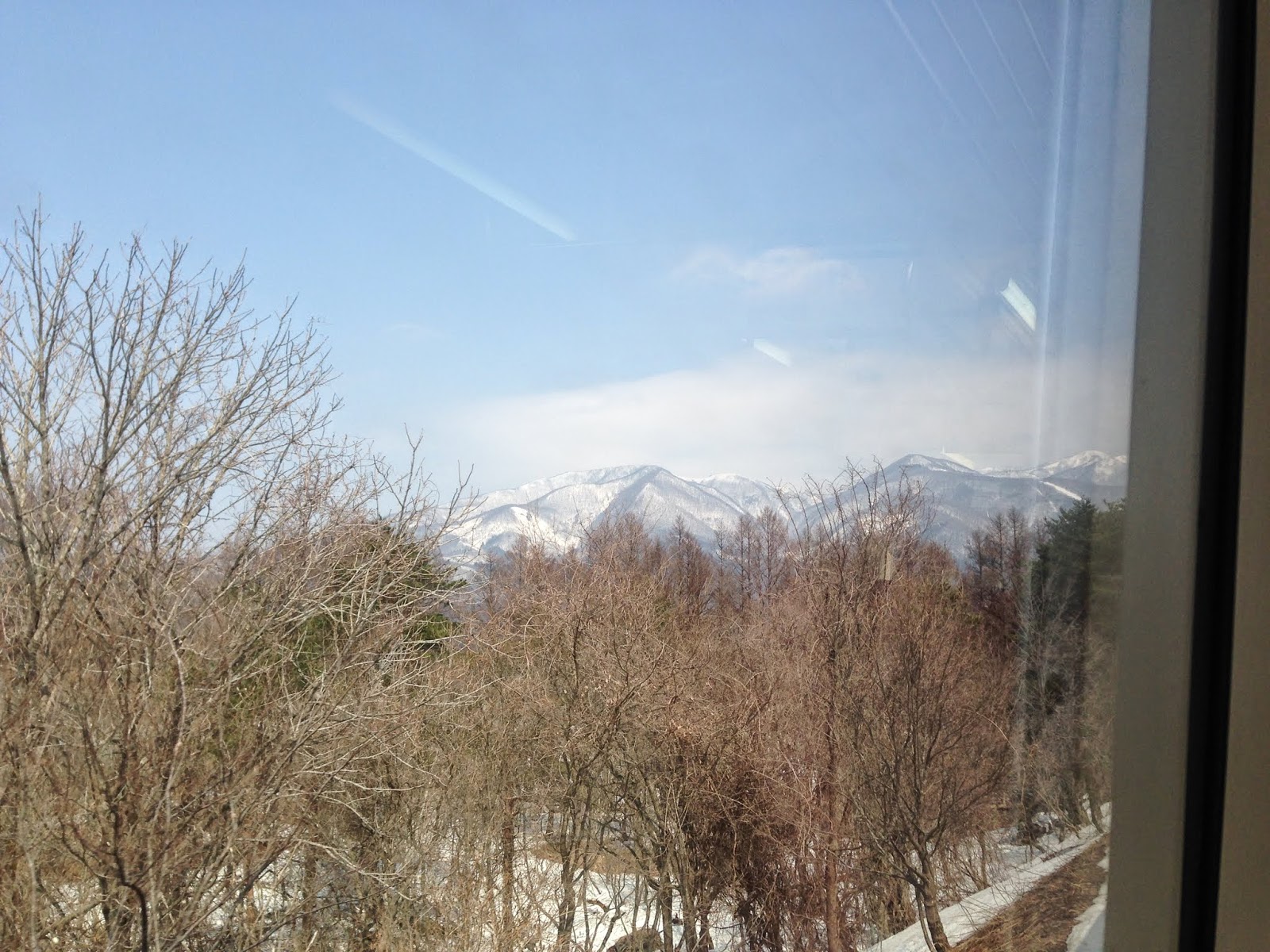
From Koriayama it was the Ban'etsu line. There is still a reasonable amount of snow. This part of Japan gets some of the heaviest falls, 3m + in winter.

Snow

And more snow

Aizu.

Aizu is somewhere I want to spend a little time in. It's a historic city &
the site of one of the bloodiest battles of the Boshin War, the war that 
"restored" Japan to imperial rule.